All Categories
Featured
Why Regional Financial Obligation Programs are Acquiring ...

Breaking the Code of Automated Credit Checks in Your Area

Avoiding Financial Obligation Relapse for Regional Residents
Table of Contents
Mental Barriers to Decreasing Interest in the local area
Customer habits in 2026 remains greatly influenced by the psychological weight of monthly responsibilities. While the mathematical expense of high-interest debt is clear, the psychological roadblocks avoiding efficient payment are typically less visible. The majority of citizens in the local market face a typical cognitive hurdle: the propensity to concentrate on the instant monthly payment instead of the long-term accumulation of interest. This "anchoring bias" occurs when a borrower takes a look at the minimum payment needed by a credit card company and subconsciously treats that figure as a safe or proper quantity to pay. In truth, paying just the minimum permits interest to compound, typically resulting in consumers repaying double or triple what they originally borrowed.
Breaking this cycle needs a shift in how debt is perceived. Rather of seeing a charge card balance as a single lump amount, it is more efficient to view interest as a daily cost for "renting" cash. When people in regional markets start determining the hourly cost of their financial obligation, the inspiration to lower primary balances intensifies. Behavioral financial experts have noted that seeing a concrete breakdown of interest costs can activate a loss-aversion response, which is a much more powerful incentive than the pledge of future savings. This mental shift is necessary for anybody intending to stay debt-free throughout 2026.
Need for Debt Management Plan has increased as more individuals recognize the need for professional assistance in reorganizing their liabilities. Getting an outside perspective helps eliminate the psychological embarassment typically connected with high balances, permitting a more clinical, logic-based approach to interest reduction.
The Cognitive Impact of Rates Of Interest in various regions
High-interest financial obligation does not just drain checking account-- it creates a constant state of low-level cognitive load. This mental strain makes it harder to make smart financial decisions, developing a self-reinforcing loop of poor options. Throughout the nation, customers are finding that the stress of bring balances results in "choice tiredness," where the brain merely provides up on complex budgeting and defaults to the simplest, most costly habits. To combat this in 2026, numerous are turning to structured debt management programs that simplify the payment process.
Nonprofit credit therapy companies, such as those approved by the U.S. Department of Justice, provide a necessary bridge in between overwhelming debt and financial clearness. These 501(c)(3) organizations offer financial obligation management programs that consolidate several regular monthly payments into one. They work out directly with lenders to lower interest rates. For a consumer in the surrounding area, minimizing a rates of interest from 24% to 8% is not simply a math win-- it is a psychological relief. When more of every dollar approaches the principal, the balance drops faster, supplying the favorable support required to stick to a budget plan.
Formal Debt Management Plan remains a common option for households that require to stop the bleeding of compound interest. By getting rid of the complexity of handling a number of different due dates and changing interest charges, these programs permit the brain to concentrate on earning and saving instead of simply enduring the next billing cycle.
Behavioral Methods for Financial Obligation Prevention in 2026
Staying debt-free throughout the remainder of 2026 includes more than just paying off old balances. It requires a fundamental modification in spending triggers. One effective approach is the "24-hour guideline" for any non-essential purchase. By requiring a cooling-off period, the initial dopamine hit of a possible purchase fades, enabling the prefrontal cortex to take over and assess the true requirement of the product. In local communities, where digital marketing is constant, this psychological barrier is an essential defense reaction.
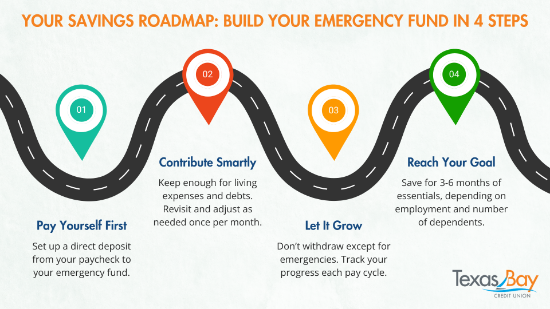
Another mental technique involves "gamifying" the interest-saving procedure. Some find success by tracking exactly how much interest they avoided monthly by making extra payments. Seeing a "saved" quantity grow can be simply as satisfying as seeing a bank balance increase. This turns the story from among deprivation to among acquisition-- you are acquiring your own future income by not offering it to a lending institution. Access to Debt Management Plan in Knoxville provides the instructional foundation for these routines, guaranteeing that the progress made during 2026 is permanent rather than short-lived.
The Connection Between Real Estate Stability and Customer Financial Obligation
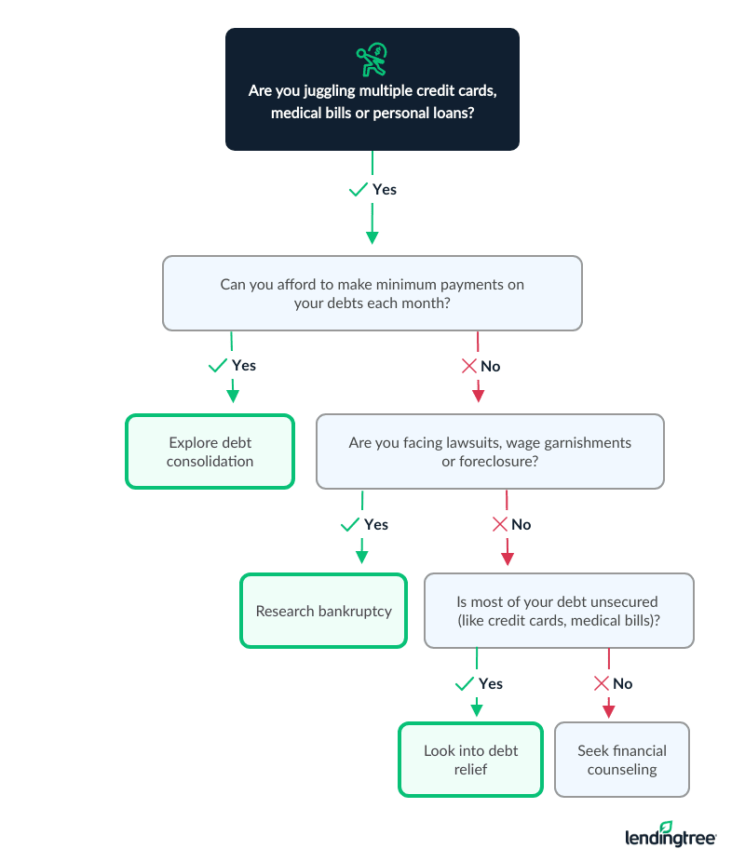
Real estate stays the largest expense for a lot of families in the United States. The relationship between a mortgage and high-interest customer financial obligation is mutual. When credit card interest consumes excessive of a home's earnings, the danger of housing instability increases. On the other hand, those who have their real estate expenses under control discover it much simpler to tackle revolving financial obligation. HUD-approved real estate counseling is a resource frequently ignored by those focusing just on charge card, but it provides a detailed take a look at how a home suits a wider financial image.
For homeowners in your specific area, seeking counseling that addresses both real estate and customer debt ensures no part of the financial image is ignored. Expert counselors can assist focus on which debts to pay very first based upon rates of interest and legal securities. This objective prioritization is often impossible for somebody in the middle of a financial crisis to do by themselves, as the loudest lenders-- frequently those with the greatest rate of interest-- tend to get the most attention regardless of the long-term impact.
The function of nonprofit credit therapy is to serve as a neutral third celebration. Because these firms operate as 501(c)(3) entities, their goal is education and rehabilitation rather than profit. They offer free credit therapy and pre-bankruptcy education, which are necessary tools for those who feel they have reached a dead end. In 2026, the accessibility of these services across all 50 states implies that geographic location is no longer a barrier to receiving premium monetary advice.
As 2026 advances, the difference between those who have problem with financial obligation and those who remain debt-free typically boils down to the systems they put in location. Depending on self-control alone is rarely effective since determination is a limited resource. Rather, using a financial obligation management program to automate interest reduction and principal payment creates a system that works even when the person is exhausted or stressed. By combining the psychological understanding of spending triggers with the structural benefits of nonprofit credit therapy, customers can guarantee that their financial health stays a concern for the rest of 2026 and beyond. This proactive method to interest decrease is the most direct path to monetary self-reliance and long-term assurance.

Table of Contents
Latest Posts

Why Regional Financial Obligation Programs are Acquiring Appeal

Is Refinancing Better Than Combination for Santa Clarita California Debt Management Homeowners?

Why Local Households Trust Nonprofit Therapy Agencies
More
Latest Posts
Why Regional Financial Obligation Programs are Acquiring Appeal
Is Refinancing Better Than Combination for Santa Clarita California Debt Management Homeowners?
Why Local Households Trust Nonprofit Therapy Agencies